

Philadelphia eagles quarterback Jalens hurts season came to an unexpected end following the discovery of blood clots in his lungs, a potentially life threatening condition known as pulmonary embolism. The news caught the sports world by surprise as many were wondering how the organization could let the condition of their star player go unnoticed. This raised important questions, when does an athlete’s health become more important than the game of football? According to NFL reporters, on October 8th Hurts reported issues with his calf after taking a hit to his calf from the cleat of another player. Following an injury to a blood vessel, the body activates a physiological process called hemostasis, which helps prevent excessive bleeding by forming a clot. According to Mayo Clinic staff the causes of clots are most commonly from the deep veins of your legs, known as deep vein thrombosis, however clots can accumulate as they develop within the vessel even when not needed, increasing risk of a pulmonary embolism from developing. Ahead of their next game in London Hurts remained a full participant in practice and flew with his team to London with said blood clot in his leg, which according to the CDC can increase risks, if a clot forms in a deep vein of the leg it can eventually travel to the lungs which is a concern for his health. This raises to concerns of the principles of biomedical ethics of Non maleficiance, we see from the outside how this principle was ignored as the professional staff who was in charge of Hurt’s care did not do anything to avoid further harm to Jalen while also of providing him non accurate details of his conditions not sharing the risk he would be taking to his life as they reportedly informed Jalen he was clear to play which could be argued lacked principle ethic of justice and autonomy. This team gave him dangerous advise to not sleep, which for an quarterback he needs to be alert and aware to protect himself. As a whole I think this opens up discussions for the treatment and management of players in all sports, when it is all said and done we are human and these athletes are worth more than a game. This event could have been avoided had someone stepped in and said “This is dangerous”.
Work Cited
https://www.mayoclinic.org/diseases-conditions/pulmonary-embolism/symptoms-causes/syc-20354647
The female reproductive system works in extraordinary ways, yet it is not perfect. When it comes to pregnancies, there are possibilities for a gestational sac to implant itself in places other than the uterus where a normal pregnancy occurs. Unfortunately, ectopic pregnancies are the leading cause of maternal mortality in the first trimester. Ectopic pregnancies occur in about 1-2% of all pregnancies and although this number may seem small, it is roughly 1 in 50 to 1 in 80 pregnancies.
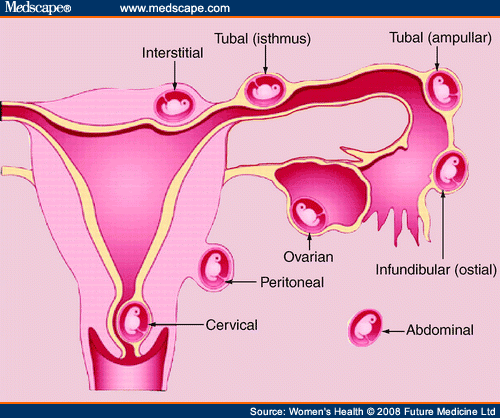
There are many different types of ectopic pregnancies where the most common (95%) is a tubal ectopic pregnancy where the gestational sac implants itself in the fallopian tube. The second most common (2-4%) is an interstitial ectopic pregnancy where the gestational sac implants in the proximal muscular segment of the fallopian tube that lies inside the uterine wall. Ectopic pregnancies are often difficult to diagnose since it clinically mimics symptoms that are due to conditions like appendicitis, urinary calculi and early pregnancy loss.
There are medical management and surgical managements for ectopic pregnancies. Salpingostomy and salpingectomy are surgical approaches to manage ectopic pregnancies. Sapingostomy consists of removing solely the ectopic pregnancy via an incision in the fallopian tube whereas a salpingectomy includes removal of part or all of the fallopian tube. Unfortunately, current legal proceedings and changes to state legislature may affect ectopic pregnancy treatment despite its possibility for maternal mortality. Learning about this really made me think about treatment and the limitations to care that a woman must endure due to specific policies.
Sources:
Mullany K, Minneci M, Monjazeb R, C. Coiado O. Overview of ectopic pregnancy diagnosis, management, and innovation. Women’s Health. 2023;19. doi:10.1177/17455057231160349
Fall break has ended and the weather is getting colder, the sun is rising later, and it's getting harder and harder for me to wake up in the early morning for practice. At the beginning of the season, it was easy for me to get excited when it was bright outside before I woke up. It was easier for me to stay energetic throughout the week because school had started and so did my normal routine. So why do I now feel more tired throughout the week? Wouldn't you think that I would be adapted to my routine by now? This is a common experience among many athletes known as burnout.
Athletes that experience burnout are often guilty of overtraining and spreading themselves too thin. This can lead to one of the symptoms of athlete burnout is sleep disruption and fatigue. When an athlete trains too much, they exhaust their HPA axis. We know that the HPA axis results in the release of cortisol into the bloodstream. This leads to another set of resulting physiological changes. The athlete's resting heart rate will increase and the raised cortisol levels can actually mess up an athlete's circadian rhythm and therefore disrupt their sleep cycle.
There is also a lot going on in the skeletal muscles when athletes are overtraining. In order for muscle to grow, it needs to be broken down first. When working out, athletes are breaking down their muscle tissue at tiny fibers and then, with the help of protein, rebuild those tissues to become stronger. When an athlete overtrains, they don't allow time for the muscles to regrow after they are stressed and broken down. This leads to muscle soreness and injuries that result from overuse.
Although burnout can lead to physical health problems, there is also research that shows burnout can lead to depression if there is no intervention. There have also been studies done that displays how burnout can predict a lower quality of academic performance in school. Elevated stress levels can negatively affect emotions as well as personal relationships.
The moral of the story is that athletes need to listen to every part of their body during every season. While getting extra work in will eventually lead to growth and an advantage, there is a fine line between a couple extra reps and exhausting oneself. Rest and recovery are just as important as any workout one could finish.
Beauchamp, M. R. (2025). Athlete burnout paves the way for further health problems. Apa.Org. https://www.apa.org/pubs/highlights/spotlight/athlete-burnout
Festersen, C., Espinosa, E., Lockwood Mullaney, E., & Carey, L. (2025, May 12). Burnout: Causes and consequences. Pressbooks. Conncoll.Edu. https://openpress.digital.conncoll.edu/psychologyinsport/chapter/burnout-2/

Growing up, I always took antibiotics for what most likely was a viral illness. My family always got them from the small Mexican store when flu season came around. I never really questioned it, penicillin and amoxicillin were always available at my house whether it was injectable or a round of pills. When I entered college, I learned about antibiotic resistance and when I got my first job in the ED, I was being educated about misconceptions and medication regimens while a patient was as well. I questioned my parents about this faulty use of antibiotics, and in truth, they didn't know the difference between a viral and bacterial infection. That is why getting antibiotics was just checking a box rather than an educated decision for them. This wasn't because my parents were ignorant, rather they never had the education to understand how it worked.
Prescription of antibiotics for a viral illness isn't done for three reasons. Antibiotics destroy bacterial cell membranes and since viruses are not cells, the antibiotics are not able to target viruses. Antibiotics also have side effects like diarrhea and nausea, where prolonged use can cause harm to your kidneys, livers or other body parts. Unnecessary antibiotic use can cause us to become resistant to antibiotics and when one gets a true bacterial infection, antibiotics don't help.
As I continued to work in the ED, I saw a lot of patients come in requesting antibiotics for a viral illness. Sometimes the physician would have the time to explain why antibiotics weren't needed, yet the majority of the time, 10 other people were waiting for triage and patient education wasn't necessarily an option. Some people believe that as a healthcare worker, one has to remain completely unbiased and always fulfill patients' demands. But, how do you say no to a patient that fully believes a round of amoxicillin will cure them despite no signs of bacterial infection? How does a busy ED change the possibility of getting antibiotics? Is it medical malpractice if a physician gives antibiotics at the patient's demand? Let me know what you think!
Kern, C. (2023, May 10). Why antibiotics are't always the answer for an illness. Mayo Clinic Health System. https://www.mayoclinichealthsystem.org/hometown-health/speaking-of-health/3-reasons-why-you-did-not-receive-antibiotics-from-your-provider

When an athlete is thinking about themselves missing in the big moment, their anxiety is spiking and the amygdala thinks the body is receiving a threat which leads to its activation. They begin to focus on information they think is relative to that threat, like the noise of hecklers in the crowd or the pressure of the situation in the game. This distracts them from the task at hand. The “tunnel vision” they experience blocks information that is relevant to the game situation. The amygdala activation ends up hijacking the prefrontal cortex. We know from our first unit that this cortex is involved in decision making. So, when this is hijacked, athletes become more impulsive and begin to make less logical decisions in the face of pressure.
Anxiety can also cause rapid breathing instead of slow and deep breaths. This results in more fatigue because there is decreased oxygenation to the muscles. Muscles can also become stiff in that moment, causing athletes to become less agile. The “tunnel vision” mentioned earlier can also affect an athlete’s movement. When they’re hyperfocused on their next move, their movements become robotic, rather flowing freely in the game.
Anxiety and self-doubt are reinforcing cycles. When one is anxious, they might make a mistake, then they begin to doubt themselves and worry about making another mistake, increasing their anxiety again and feeding the loop.
In order to combat this, athletes need to put perspective into the situation. Rather than focusing on future consequences and increasing anxiety, it’s important to focus on their own confidence in that present moment. Remembering one’s training and self-reassurance are tools that can help bring athletes back from the feedback loop that anxiety causes. Deep breathing can then help further calm athletes down by stimulating the vagus nerve. This helps reduce blood pressure and the amygdala firing.
Treat the big moments just like any other moment and don’t overthink something you’ve done a repeated amount of times. Trusting in yourself, your training, and your teammates will allow you to have minimal anxiety in the clutch moments.
Quigley, K. (2026, July 17). Onrise | mental health care for athletes - peer support & clinical care. Onrise. https://onrise.care/anxiety-effects-sports-performance/

Music can initiate a pleasure pathway in the brain that causes the release of dopamine, which significantly increases your mood. The “feel good” hormone can increase motivation and focus. This is necessary for my attentiveness at an early hour. The limbic system is also linked to music. The hippocampus creates linked memories to music and the amygdala connects music to emotion. If one listens to calming music, they can also decrease their anxiety because the slow rhythm of the song can lower hormones like cortisol and result in decreasing blood pressure. Music affects our autonomic nervous system by influencing our heart rate and other involuntary actions.
On the other hand, research shows that music can also negatively impact your mood if you use it in a certain way. If one is in a sad mood and starts listening to sad music, they might intensify those sad feelings. In a situation like that, it would be better to start listening to sad music in order to feel and contact that emotion, then transition into more upbeat music so that the mood can transition as well.
There has also been evidence that music can be healing in many ways. For instance, Mozart’s Sonata for Two Pianos in a D minor has been found to decrease seizures in a certain amount of people with epilepsy.
So it turns out music really can have a physiological effect on you. The part of my morning routine that I had never abandoned has actually been increasing my mood and allowing me to kick start my day. If you’re feeling a little groggy in the morning, turn on some pumped up jams to get yourself ready for the day and give yourself some confidence!
Boothby, S. (2017, April 13). Does music affect your mood? Healthline Media. Healthline. https://www.healthline.com/health/mental-listening-to-music-lifts-or-reinforces-mood-051713
Eck, A. (2024, March). How music resonates in the brain. Harvard Medicine. Magazine.Hms.Harvard.Edu. https://magazine.hms.harvard.edu/articles/how-music-resonates-brain
B
So you're at the gym, or you're at practice, or you're just being active. There are sometimes moments when you are in need of rapid aid, or you want to relieve a cramp. Leon Draisaitl and Mark Leteshu, professional hockey players, have been recognized for eating mustard and, when asked why, they say that it reduces cramps. Not only are athletes consuming mustard, but individuals who exercise are, too. But why mustard? This isn't widely recognized as addressing cramps directly, but research has suggested that ingredients within the mustard can calm overactive motor neurons that are involved in muscle cramps (Grapperon & Attarian, 2017).
Exercise-associated muscle cramps (EAMC’s) are involuntary contractions in the skeletal muscle that take place during muscle exertion and post-exercise (Miller et al., 2021). Muscle cramps are altered by the central and peripheral nervous system through neuromuscular excitability, and the severity of the muscle cramps is determined by the location of the muscle group (Miller, 2019; Miller et al., 2021).
So why consume mustard in the middle of a hockey game?
Hockey players can lose up to 1.5 liters of water per game because more sweat is expelled to the surface of the skin, causing plasma volume loss as exposed heat rises (Gambel et al., 2019). They need to be able to combat this, and it can be done through consumption of mustard, which replenishes plasma volume loss in the circulating blood (Convertino, 2007).
Mustard targets transient receptor potential (TRP) receptors. TRP channels have a role in the sensory nervous system, acting as signal transducers that detect sensation and temperature (Miller et al., 2021; Himmel et al., 2020). EAMC’s are able to stimulate TRPA1 receptors, which contribute to pathological pain (Urata et al., 2015), inducing neuronal excitation and hypersensitive pain (Hu et al., 2023). Mustard is a TRP receptor agonist; increased vinegar and salt concentrations reduce excitation and can relieve acute muscle cramps for a short period of time (Miller et al., 2021). But because of the poor chemical properties, it is not understood yet to say for sure wether there is acute relief.
References
Convertino, V. A. (2007). Blood volume response to physical activity and inactivity. The American Journal of the Medical Sciences, 334(1), 72–79. https://doi.org/10.1097/maj.0b013e318063c6e4
Gamble, A. S. D., Bigg, J. L., Vermeulen, T. F., Boville, S. M., Eskedjian, G. S., Jannas-Vela, S., Whitfield, J., Palmer, M. S., & Spriet, L. L. (2019). Estimated sweat loss, fluid and carbohydrate intake, and sodium balance of male major junior, AHL, and NHL players during on-ice practices. International Journal of Sport Nutrition and Exercise Metabolism, 29(6), 612–619. https://doi.org/10.1123/ijsnem.2019-0029
Grapperon, A.M., & Attarian, S. (2017). Disorders of motor neurons manifested by hyperactivity. Motor Neuron Diseases, 173(5), 345–351. https://doi.org/10.1016/j.neurol.2017.04.00 2
Himmel, N. J., & Cox, D. N. (2020). Transient receptor potential channels: Current perspectives on evolution, structure, function and nomenclature. Proceedings of the Royal Society B: Biological Sciences, 287(1933), 20201309. https://doi.org/10.1098/rspb.2020.1309
Hu, Z., Zhang, Y., Yu, W., Li, J., Yao, J., Zhang, J., Wang, J., & Wang, C. (2023). Transient receptor potential ankyrin 1 (TRPA1) modulators: Recent update and future perspective. European Journal of Medicinal Chemistry, 257(0223–5234), 115392–115392. https://doi.org/10.1016/j.ejmech.2023.115392
Miller, K. C. (2019). Exercise-associated muscle cramps. Exertional Heat Illness, 117–136. https://doi.org/10.1007/978-3-030-27805-2_6
Miller, K. C., McDermott, B. P., Yeargin, S. W., Fiol, A., & Schwellnus, M. P. (2021). An evidence-based review of the pathophysiology, treatment, and prevention of exercise-associated muscle cramps. Journal of Athletic Training, 57(1), 5–15. https://doi.org/10.4085/1062-6050-0696.20
Urata, K., Shinoda, M., Honda, K., Lee, J., Maruno, M., Ito, R., Gionhaku, N., & Iwata, K. (2015). Involvement of TRPV1 and TRPA1 in incisional intraoral and extraoral pain. Journal of Dental Research, 94(3), 446–454. PubMed Central. https://doi.org/10.1177/0022034514565645
We’ve all heard the classic warning: “Don’t step on that rusty nail or you’ll get tetanus!”
While rust gets all the blame, the truth is a little different and a lot more interesting. Tetanus doesn’t actually come from rust itself; it comes from microscopic bacterial spores (Clostridium tetani) that live chilling out in everyday soil, dust, and animal manure. The rust is just a sign that an object has been sitting outside in the dirt for a long time.

Now how does tetanus affect more then just our jaw you might ask, well when you move your body, your nervous system coordinates with it. when you flex you bicep, your brain sends a singal telling your bicep to relax, when tetanus takesover the Tetanospasmin ( the neurotoxin) goes up your nerve pathway and into the nervous system blocking any signaling without the signaling going to your bicep it wont know to relax, causing painful spasms.
Now don't get scared Tetanus is not like the cold or flu meaning its not contagious person to person but it's entirely triggered by an environment encounter. Getting vaccinated prevents all of the unwanted lockjaw and spores getting into your body and effectively taking over. Most of us got a series of shots as kids (like DTaP). As adults, we need a booster (Td or Tdap) every 10 years to keep our immune system in check.
Sources:
Centers for Disease Control and Prevention. (2026, September 8). About tetanus. U.S. Department of Health & Human Services.
Mayo Clinic Staff. (2023, December 21). Tetanus: Symptoms & causes. Mayo Foundation for Medical Education and Research.

Pereira, A. G., Cunha, L. N. D. P., Paiva, S. A. R., Azevedo, P. S., Zornoff, L. A. M., Polegato, B. F., ... & Minicucci, M. F. (2026). An overview of beriberi. Medical Principles and Practice, 35(1), 18-24. Urbina, J., Salinas‐Ruiz, L. E., Valenciano, C., & Clapp, B. (2026). Micronutrient and nutritional deficiencies associated with GLP‐1 receptor agonist therapy: a narrative review. Clinical obesity, 16(1), e70070. |
| Xie, X., Deng, L., Zhao, J., Sun, X., Liu, L., Pan, X., & Zhang, Y. (2026). Fulminant cardiovascular collapse after acute pancreatitis: a case report of non-alcoholic Shoshin beriberi and literature review. AME Case Reports, 10, 88. |
The sweet science, also known as boxing, is a combat sport with roots that go deep into ancient history. However, the word sport is misleading; as they say in the boxing world, "you play sports, you don't play boxing." Pugilists use their fists to punch each other until the scheduled rounds end, the referee stops the fight (TKO), or one of them gets knocked out and is not able to get up before the 10-count is over. Among the rules: no punches to the back of the head (rabbit punches) or below the belt line.
Boxing can be brutal, and the knockout is a spectacle that brings eyes to the sport. But what happens during a knockout? Physiologically, what happens to the brain that makes you conscious one moment, unconscious the next, and conscious again the following moment?
Researchers argue different hypotheses to explain what happens.
One theory is mechanoporation: pore formation in a neuronal cell membrane caused by mechanical forces. Meaning, a punch can deliver enough force to the brain that it causes neuronal axons to stretch until a pore develops in the membrane. They argue that the reason you go out is because the pores in the cerebral cortex block action potentials. Once the pores reseal, which can take minutes, you wake up (Hånell & Rostami 2020). It's not confirmed nor agreed to where the exact location this happens. Some argue its the ascending reticular activating system in the brainstem, which keeps you awake.
One theory is mechanoporation: pore formation in a neuronal cell membrane caused by mechanical forces. In other words, a punch can deliver enough force to the brain that it causes neuronal axons to stretch until a pore develops in the membrane. Researchers argue that the reason you go out is that the pores in the cerebral cortex block action potentials. Once the pores reseal, which happens within minutes, you wake up (Hånell & Rostami, 2020). However, mechanoporation hasn't been proven yet, since the evidence so far comes from animal studies and computer models. Researchers also haven't agreed on exactly where this happens. Some argue it's the ascending reticular activating system in the brainstem, which keeps you awake.
https://pmc.ncbi.nlm.nih.gov/articles/PMC7649325/


Harz, H., Nonnengasser, C., Hegemann, P. The photoreceptor current of the green alga Chlamydomonas. Philos. Trans. R. Soc. Lond. Ser. B: Biol. Sci. 1992:338:39–52.
Nagel G, Ollig D, Fuhrmann M, Kateriya S, Musti AM, Bamberg E, Hegemann P. Channelrhodopsin-1: a light-gated proton channel in green algae. Science. 2002:296:2395–2398.
Nagel G, Szellas T, Huhn W, Kateriya S, Adeishvili N, Berthold P, Ollig D, Hegemann P, Bamberg E. Channelrhodopsin-2, a directly light-gated cation selective membrane channel. Proc. Natl. Acad. Sci. U. S. A. 2003:100:13940–13945.
Boyden ES, Zhang F, Bamberg E, Nagel G, Deisseroth K. Millisecond-timescale, genetically targeted optical control of neural activity. Nat. Neurosci. 2005:8:1263–1268.
Aravanis AM, Wang LP, Zhang F, Meltzer LA, Mogri MZ, Schneider MB, Deisseroth K. An optical neural interface: in vivo control of rodent motor cortex with integrated fiberoptic and optogenetic technology. J Neural Eng. 2007:4:S143–156.
As a college student, I feel like there's a race against the clock between attending class, doing homework, studying, going to work, and just everything else that I have to complete at that time. Just staring at a list of everything that I have to do in a time constraint makes me feel very stressed before I even begin. This prompted me to consider whether the feeling of not having enough time is enough to elicit a physical stress response.
Stress affects the body largely through the autonomic nervous system, which includes the sympathetic and parasympathetic nervous systems. The sympathetic nervous system functions to assist the body to react when it is under stress, while the parasympathetic nervous system functions to help the body go back to a more relaxed resting state (Kim et al., 2018). A general measure of this sympathetic parasympathetic relationship that researchers can look at is heart rate variability (or HRV) which is the variation in time between each individual heartbeat (Kim et al., 2018). Schmid et al. (2024) investigated if time pressure could elicit this sort of cardiological response to everyday stress. The team followed 394 adults for two to four days. The participants regularly tracked and reported the levels of time pressure and emotional fatigue they experienced while being wired to a wearable electrocardiogram to measure their HRV. Rather than having the participants produce stress in a laboratory setting, the team was able to study the elicited bodily responses to real-life stress. The researchers found that when participants experienced greater time pressure, their HRV temporarily decreased (Schmid et al., 2024). This decline reflects decreased parasympathetic tone and is what we would expect physiologically if a person is presented with an immediate stressor. The authors also observed that individuals whose HRV was more responsive to time pressure were more likely to report having high emotional exhaustion.
I always think of stress coming from things such as taking a difficult exam or experiencing a major life event, but even something as simple as frequently seeing the time on the clock or stressing about deadlines causes our bodies to respond. Having read this research, I believe I must be more aware of my own pacing. Rather than continually rushing and stressing myself out, I will now plan ahead and give myself even more extra time to get tasks done. This will go a long way to reducing the pressure of feeling like I am under a time constraint all the time.
Kim, H.-G., Cheon, E.-J., Bai, D.-S., Lee, Y. H., & Koo, B.-H. (2018). Stress and heart rate variability: A meta-analysis and review of the literature. Psychiatry Investigation, 15(3), 235–245. https://doi.org/10.30773/pi.2017.08.17
Schmid, R. F., Thomas, J., & Rentzsch, K. (2024). Individual differences in parasympathetic nervous system reactivity in response to everyday stress are associated with momentary emotional exhaustion. Scientific Reports, 14, 26662. https://doi.org/10.1038/s41598-024-74873-9


