Four patients at Ascension Saint Thomas Midtown Hospital in Nashville, Tennessee, entered the operating room for joint replacement surgery and were given the incorrect medication, leading to serious and unexpected complications.
Rather than receiving mepivacaine, the spinal anesthetic intended for them, they were administered potassium phosphate. The hospital pharmacy made the mistake. In general, hospital pharmacies prepare and pre-fill medications into syringes so the anesthesiologist can give them during surgery. In this instance, however, the wrong medication was both prepared and administered.
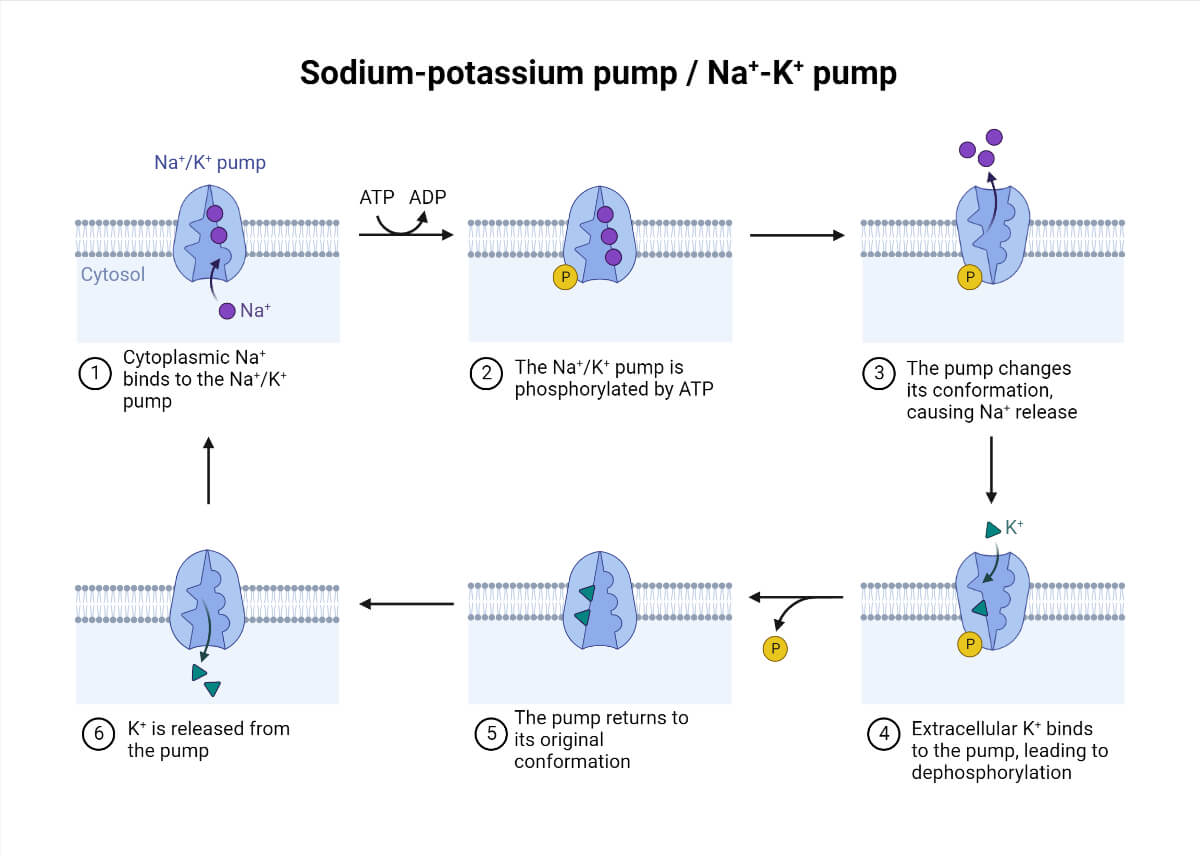
Potassium phosphate should be given in a diluted form. If a concentrated potassium solution is given extracellularly, it raises the concentration of K⁺ outside the cells and disrupts the normal electrochemical gradient across the cell membrane. As the amount of K⁺ outside the cells increases, the membrane potential becomes less negative, causing the cell to depolarise. With severe and prolonged depolarisation, voltage-gated Na⁺ channels become inactivated, preventing excitable cells from producing normal action potentials.
This is especially dangerous since neurons, skeletal muscle cells, and cardiac muscle cells depend on precisely controlled ion gradients to carry out normal electrical activity. In the heart, a large rise in extracellular K⁺ can disrupt electrical activity and may lead to life-threatening arrhythmias or cardiac arrest. High potassium in the blood is called hyperkalemia.
The incident shows how crucial ion concentrations and electrochemical gradients are to normal cellular function. A medication error involving a substance as basic as potassium can have catastrophic consequences because cells depend on these gradients every second to communicate, contract, and carry out normal physiological functions.


Sources:
For the Ascension medication error:
Ascension Saint Thomas. (2026, September 9). Ascension Saint Thomas Midtown update. Ascension Saint Thomas Midtown Update
For the sodium-potassium pump:
Pirahanchi, Y., Jessu, R., & Aeddula, N. R. (2023). Physiology, sodium-potassium pump. In StatPearls. StatPearls Publishing. Physiology, Sodium Potassium Pump — NCBI Bookshelf
For hyperkalemia and the membrane-potential explanation:
Kovesdy, C. P. (2015). Updates in hyperkalemia: Outcomes and therapeutic strategies. Reviews in Endocrine and Metabolic Disorders, 16(1), 33–43. Hyperkalemia — PMC
Images:
Google Image Search and Tools


This shows just how precise you have to be in the world of healthcare. Some people wonder why students have to go through such extensive schooling and this is a great example why. If there was more serious damage would the hospital be held liable and how can we make situations like this safer and more trustworthy?
ReplyDeleteIt’s surprising how quickly excess potassium can disrupt action potentials and lead to serious complications, especially in the heart. Do you think the effects would have been less severe if the medication error had been recognized immediately?
ReplyDeleteI agree with Maggie on how precision is crucial in healthcare. Schooling is very important, but proper self care also is. Whether it's getting adequate support from your employer that allows for balance or giving yourself mental health days, making sure you're taking care of yourself is important to provide optimal care. Although burn out should not be an excuse to endanger someone's life, it definitely plays a role due to the shortage of medical providers.
ReplyDeleteVery interesting, I think bringing this up is important for being able to think through what you could do in a similar scenario. So with that being said, how could you respond effectively as the doctor in the room.
ReplyDeleteIn the ER, when you have administered potassium phosphate, incidentally, you are going to have to react quickly understanding that things are not going well with the patient. Being able to recognize what is going on after the administration of mepivacaine, what to look for, and reacting responsively.
So, first things first, as a clinician, you must access what is in front of you, assessing the ECG monitor, as you would observe peaked T waves and wide QRS complexes (Biff et al., 2021).
Now you have determined the patient has acute hyperkalemia. To minimize the potential risk of a cardiac arrhythmia, you must inject the patient with intravenous salbutamol with insulin to reduce the amount of extracellular potassium (Biff et al., 2021; Jessen et al., 2025).
References:
Jessen, M. K., Andersen, L. W., Djakow, J., Chong, N. K., Stankovic, N., Staehr, C., Lauge Vammen, Petersen, A. H., Johannsen, C. M., Eggertsen, M. A., Mortensen, S. Ø., Høybye, M., Casper Nørholt, Holmberg, M. J., & Asger Granfeldt. (2025). Pharmacological Interventions for the Acute Treatment of Hyperkalaemia: A Systematic Review and Meta-analysis. Resuscitation, 110489–110489. https://doi.org/10.1016/j.resuscitation.2025.110489
Palmer, B. F., Carrero, J. J., Clegg, D. J., Colbert, G. B., Emmett, M., Fishbane, S., Hain, D. J., Lerma, E., Onuigbo, M., Rastogi, A., Roger, S. D., Spinowitz, B. S., & Weir, M. R. (2020). Clinical Management of Hyperkalemia. Mayo Clinic Proceedings, 96(3). https://doi.org/10.1016/j.mayocp.2020.06.014
This comment has been removed by the author.
ReplyDeleteIt is so awful that this occurred. The mechanism(s) behind what happens after receiving potassium phosphate is really interesting. Thanks for sharing!
ReplyDeleteDo you think that treating the patient with calcium could help reverse the effects of severe hyperkalemia on voltage-gated sodium channels?
My reason for asking this is because I found a paper talking about administering calcium intravenously to help in stabilizing cardiac electrical activity while other treatments work to lower potassium levels. So, this made me wonder whether calcium administration could be part of the treatment process of hyperkalemia from concentrated potassium phosphate administration. What do you guys think?
https://pubmed.ncbi.nlm.nih.gov/24087806/
Unfortunately, every medical procedure has the potential to become unexpectedly dangerous due to unplanned complications such as this. These mishaps are unavoidable as part of the human component in healthcare. How then should we encourage continuous and flexible problem-solving mindsets in our healthcare workers? The aim is always perfection, but when that falls short, that aim should be quickly discarded in favor of situation management. With fast and efficient thinkers in the medical field, inevitable mistakes can be mitigated before they reach injurious levels.
ReplyDelete